Security

Regulatory compliance | Onsecc
Cyber Security

10 Essential Regulatory Compliance Tips Every Business Owner Must Know

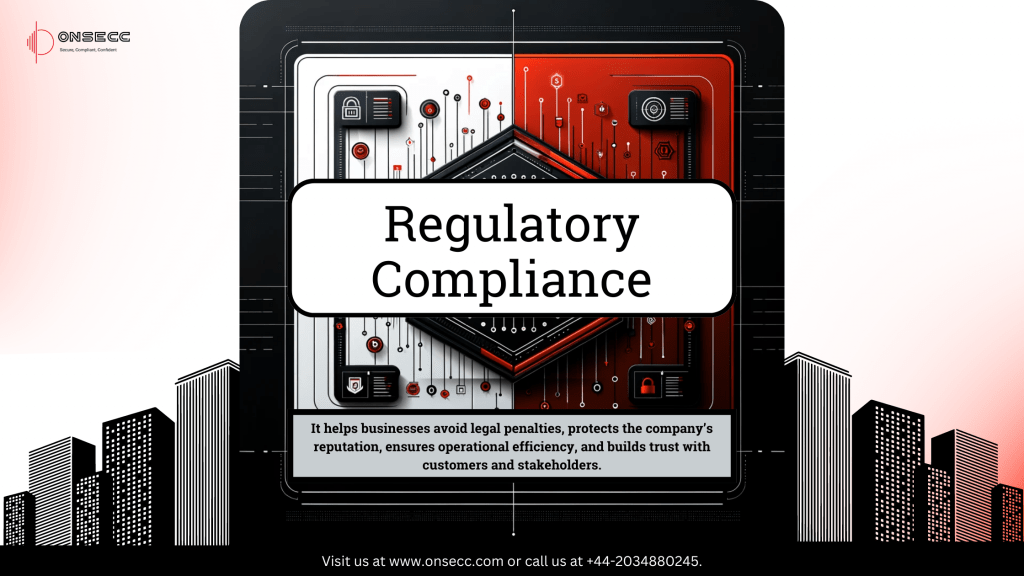
10 Essential Regulatory Compliance Tips Every Business Owner Must Know Regulatory compliance is a critical aspect for businesses, ensuring that operations align with laws, regulations, and standards set by governing bodies. Navigating these requirements can be challenging, but it is essential for maintaining business integrity and avoiding severe penalties. In This Article: Introduction Understanding Regulatory Compliance Benefits of Compliance Conclusion Incorporating statistics and data Free Assessment Introduction Regulatory compliance refers to an organization’s adherence to laws, regulations, guidelines, and specifications relevant to its business operations. Compliance ensures that companies operate within the legal framework and uphold standards set by regulatory bodies. The importance of regulatory compliance spans across various industries, from healthcare and finance to technology and manufacturing. Non-compliance can lead to severe consequences, including legal penalties, financial losses, and reputational damage. This article covers ten essential tips every business owner must know to navigate the complex landscape of regulatory compliance effectively. Understanding Regulatory Compliance Regulatory compliance involves understanding and adhering to a set of regulations and standards applicable to a business. These regulations are designed to protect public interest, ensure fair practices, and maintain ethical standards within industries. Importance of Compliance Compliance is crucial for maintaining operational efficiency and public trust. It ensures that businesses operate within legal boundaries and uphold ethical standards. Compliance also helps in avoiding legal penalties and financial repercussions. Common Compliance Challenges Businesses often face challenges such as understanding complex regulations, keeping up with regulatory changes, and implementing effective compliance management systems. These challenges can hinder compliance efforts and increase the risk of non-compliance. Benefits of Compliance Adhering to compliance regulations offers several benefits, including legal protection, enhanced reputation, operational efficiency, and trust with customers and stakeholders. Compliance also minimizes risks and helps in maintaining a competitive edge. 1. Understand the Specific Regulations for Your Industry Understanding the regulations specific to your industry is the first step towards compliance. Each industry has unique regulatory requirements, and it’s crucial to identify and understand them thoroughly. Identify relevant regulations (e.g., GDPR for data protection, HIPAA for healthcare) Determine specific requirements for compliance Regularly update your knowledge on regulatory changes 2. Implement a Compliance Management System A compliance management system helps in systematically managing compliance efforts. It ensures that all regulatory requirements are met efficiently. Key components of a compliance management system include policies, procedures, and controls Benefits of using compliance management software include automation, efficiency, and accuracy Steps to implement a compliance management system involve planning, execution, monitoring, and continuous improvement Loading… 3. Conduct Regular Compliance Audits Regular audits help in identifying and rectifying compliance issues. They ensure that the business adheres to all regulatory requirements. Importance of compliance audits: they identify gaps and areas for improvement Steps to conduct an effective compliance audit: planning, execution, reporting, and follow-up Frequency of audits: regular intervals, typically annually or semi-annually, depending on industry requirements 4. Train Employees on Compliance Requirements Employee training ensures that everyone is aware of compliance requirements. A well-informed workforce is crucial for maintaining compliance. Topics to cover in training sessions: regulatory requirements, company policies, and procedures Methods of delivering training: in-person sessions, online courses, and workshops Assessing the effectiveness of training: through quizzes, feedback, and performance assessments 5. Develop Clear Compliance Policies and Procedures Clear policies and procedures provide a framework for maintaining compliance. They guide employees on how to comply with regulatory requirements. Essential elements of compliance policies: purpose, scope, responsibilities, and procedures How to document procedures effectively: use clear and concise language, including step-by-step instructions Ensuring policies are accessible to all employees: through an internal portal or manual 6. Monitor and Report Compliance Activities Continuous monitoring and reporting help in maintaining compliance. They ensure that all activities are aligned with regulatory requirements. Tools and techniques for monitoring compliance: software solutions, regular checks, and audits Importance of reporting in compliance management: transparency and accountability Key metrics to track: compliance rates, incidents, and corrective actions 7. Engage with Regulatory Experts Engaging with experts can provide valuable insights and guidance. They help in understanding complex regulations and implementing effective compliance strategies. Benefits of consulting with regulatory experts: expertise, experience, and up-to-date knowledge Types of regulatory experts to engage: consultants, legal advisors, and industry specialists How to choose the right expert for your business: based on their experience, reputation, and alignment with your business needs 8. Implement Strong Data Protection Measures Data protection is a crucial aspect of regulatory compliance. Protecting sensitive information is essential for maintaining trust and avoiding legal issues. Best practices for data protection: encryption, access controls, and regular backups Tools and technologies for data security: firewalls, antivirus software, and intrusion detection systems Legal implications of data breaches: financial penalties, legal action, and reputational damage 9. Stay Updated on Regulatory Changes Regulations are constantly evolving, so staying updated is essential. Keeping abreast of changes ensures that your compliance program remains effective. Sources of regulatory updates: government websites, industry associations, and regulatory bodies How to integrate updates into your compliance program: review and revise policies, train employees, and update compliance management systems Importance of proactive compliance management: it helps in anticipating and preparing for regulatory changes 10. Conduct Risk Assessments Regularly Risk assessments help in identifying potential compliance issues. They ensure that risks are managed proactively and effectively. Steps to conduct a risk assessment: identify risks, analyze their impact, and develop mitigation strategies Tools for risk assessment: risk assessment software, checklists, and templates How to mitigate identified risks: implement controls, monitor their effectiveness, and review regularly Conclusion Regulatory compliance is essential for every business, ensuring that operations align with laws and standards set by regulatory bodies. By understanding specific regulations, implementing a compliance management system, conducting regular audits, training employees, and staying updated on regulatory changes, businesses can maintain compliance effectively. Proactive compliance management not only helps in avoiding legal penalties but also enhances operational efficiency and public trust. Incorporating statistics and data: According to a recent study, businesses that maintain strong compliance programs reduce their risk of regulatory fines by up to 50%.

AI in Cybersecurity Compliance | Onsecc
Cyber Security

Ensuring Cybersecurity Compliance with AI: A Guide for Executive Leaders

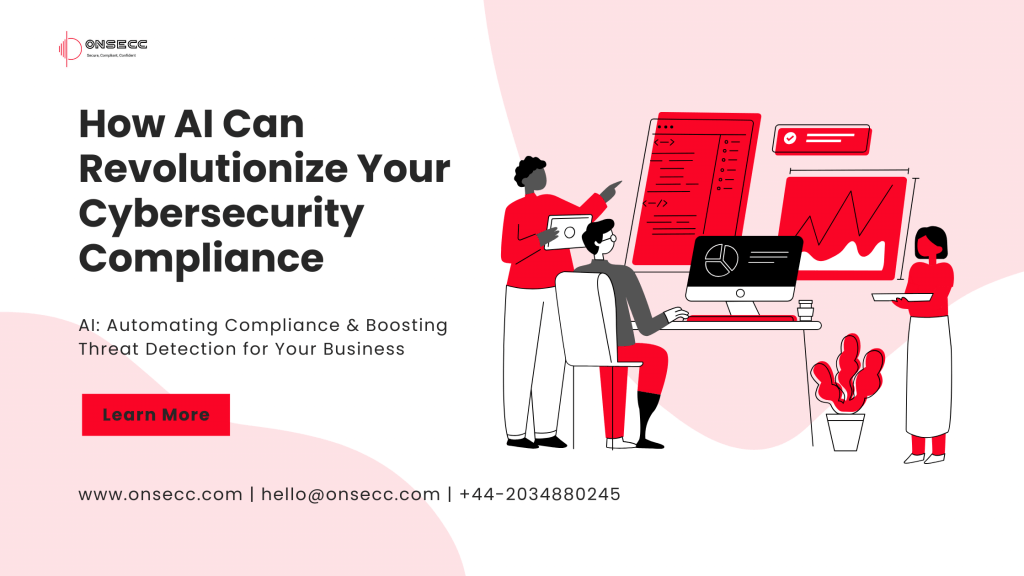
Ensuring Cybersecurity Compliance with AI: A Guide for Executive Leaders In an increasingly interconnected world, cybersecurity governance plays a pivotal role in safeguarding organizational data and mitigating risks. As organizations grapple with evolving cyber threats, the integration of AI technologies emerges as a promising solution. This article serves as a guide for executive leaders, offering insights into harnessing Artificial Intelligence for threat detection, mitigating biases, ensuring regulatory compliance, and managing workforce transitions. By exploring these critical facets, organizations can effectively leverage AI to safeguard their digital assets and uphold cybersecurity standards. In This Article: Understanding the Role of AI in Cybersecurity Compliance Addressing Ethical Considerations in AI-driven Cybersecurity Managing Risks Associated with AI Implementation Onsecc: Pioneering Cybersecurity Solutions Implementing Effective AI Governance for Cybersecurity Conclusion Free Assessment Understanding the Role of AI in Cybersecurity Compliance Introduction In today’s digital landscape, cybersecurity governance is more critical than ever. The integration of AI technologies has significantly impacted how organizations approach threat detection, risk mitigation, and compliance adherence. Executive leaders play a pivotal role in grasping the implications of AI in cybersecurity and steering their companies towards effective measures. This guide delves into the various facets of AI in cybersecurity compliance and offers insights for executive leaders on harnessing the power of Artificial Intelligence securely. Harnessing Artificial Intelligence for Threat Detection and Prevention AI presents a revolutionary solution for enhancing threat detection and prevention in cybersecurity. By leveraging machine learning algorithms, organizations can analyze vast volumes of data in real-time to identify anomalies and potential security breaches proactively. This proactive approach allows companies to stay ahead of cyber threats and safeguard their digital assets effectively. Automating Compliance Processes with Artificial Intelligence Solutions One significant advantage of Artificial Intelligence in cybersecurity governance is its ability to streamline compliance processes. Artificial Intelligence can automate routine tasks such as monitoring regulatory changes, conducting audits, and generating compliance reports. This automation not only saves time and resources but also reduces the risk of human errors, ensuring consistent adherence to cybersecurity protocols. Monitoring regulatory changes Conducting audits Generating compliance reports Addressing Ethical Considerations in AI-driven Cybersecurity As organizations embrace AI for cybersecurity purposes, ethical considerations become paramount. Transparency, fairness, accountability, and consent are essential principles that should guide the development and deployment of AI systems in the cybersecurity domain. Transparency and Explainability Ensuring that Artificial Intelligence systems are transparent and explainable is crucial. Stakeholders must have a clear understanding of how Artificial Intelligence algorithms make decisions and the implications of those decisions on cybersecurity practices. Fairness and Bias Mitigation Preventing bias in Artificial Intelligence algorithms is crucial to maintaining fairness in cybersecurity operations. Executive leaders must implement measures to mitigate biases and ensure equal treatment of all individuals and data sets involved. Accountability and Responsibility in Artificial Intelligence Systems Establishing clear lines of responsibility for the development, deployment, and monitoring of Artificial Intelligence systems is essential. This helps ensure accountability in case of any security breaches or compliance violations. Consent and Privacy Protection Respecting user consent and protecting data privacy are non-negotiable in AI-driven cybersecurity operations. Organizations must prioritize privacy rights and implement robust measures to safeguard sensitive information. Managing Risks Associated with AI Implementation While Artificial Intelligence offers significant benefits in cybersecurity compliance, it also poses inherent risks that organizations must address proactively. From data privacy concerns to algorithmic security vulnerabilities, executive leaders need to implement comprehensive risk management strategies. Real-world Examples: Industry Adoption: Many financial institutions are leveraging Artificial Intelligence for cybersecurity compliance. For instance, JPMorgan Chase utilizes AI-powered algorithms to analyze transaction patterns and detect potential fraud in real time. Healthcare Innovations: Healthcare organizations like Mayo Clinic are deploying Artificial Intelligence solutions for compliance with regulations like HIPAA. AI helps in analyzing patient data securely and ensuring adherence to privacy standards. Industry Perspectives: IT Companies: IT firms like Microsoft are investing heavily in Artificial Intelligence for cybersecurity. Their Azure Sentinel platform utilizes AI to detect and respond to threats across hybrid environments effectively. Healthcare Sector: Healthcare providers, such as hospitals and pharmaceutical companies, are increasingly adopting Artificial Intelligence to enhance compliance with regulations like HIPAA and streamline data security processes. Current Trends: AI-driven Automation: Organizations are increasingly automating compliance processes using AI. This trend aims to reduce manual efforts and ensure consistent adherence to regulatory standards. Ethical AI Frameworks: The development of frameworks for ethical Artificial Intelligence in cybersecurity is gaining traction. These frameworks focus on principles like transparency, fairness, and accountability to guide responsible Artificial Intelligence implementation. Challenges and Limitations: Data Privacy Concerns: The use of Artificial Intelligence in cybersecurity raises concerns about data privacy. Organizations must balance the benefits of AI-driven insights with the need to protect sensitive information. Bias in AI Algorithms: Bias in Artificial intelligence algorithms poses a challenge to fair cybersecurity practices. Executive leaders must address bias mitigation strategies to ensure equal treatment of all individuals and data sets. Regulatory Landscape: GDPR: The General Data Protection Regulation (GDPR) in the EU imposes strict requirements for data protection and privacy. Organizations utilizing Artificial Intelligence in cybersecurity must ensure compliance with GDPR principles. HIPAA: The Health Insurance Portability and Accountability Act (HIPAA) sets standards for protecting sensitive healthcare information. Artificial Intelligence solutions in the healthcare sector must align with HIPAA regulations to safeguard patient data. Training and Education Upskilling Workforce: Organizations need to invest in training programs to equip their workforce with the skills required for AI-driven cybersecurity compliance. Training initiatives should focus on Artificial Intelligence algorithms, data privacy laws, and ethical considerations. Certification Programs: Industry-specific certification programs help professionals stay updated with the latest trends and regulations in AI-driven cybersecurity. Certifications like Certified Information Systems Security Professional (CISSP) are valuable for demonstrating expertise in the field. Collaborative Approaches Public-Private Partnerships: Collaborations between government agencies, industry associations, and private companies facilitate information sharing and collective efforts to combat cyber threats. Cross-industry Collaboration: Sharing best practices and insights across different industries fosters collaboration in addressing common cybersecurity challenges. Forums and conferences provide platforms for cross-industry exchange of ideas and strategies. Loading… Onsecc:

𝐂𝐲𝐛𝐞𝐫𝐬𝐞𝐜𝐮𝐫𝐢𝐭𝐲 𝐑𝐞𝐠𝐮𝐥𝐚𝐭𝐢𝐨𝐧𝐬 𝐢𝐧 𝐭𝐡𝐞 𝐔𝐧𝐢𝐭𝐞𝐝 𝐒𝐭𝐚𝐭𝐞𝐬 2024 | Onsecc
Cyber Security

Cybersecurity Regulations in the United States 2024

Cybersecurity Regulations in the United States 2024 Cybersecurity has emerged as a critical concern for governments, businesses, and individuals alike, with the United States taking proactive measures to address cyber threats and protect its citizens’ data. The regulatory landscape surrounding cybersecurity in the U.S. is multifaceted, encompassing federal government initiatives, state-level regulations, and proposed legislative reforms. Let’s delve into the evolution of cybersecurity regulations in the United States and the ongoing efforts to bolster cyber defences. In This Article: Federal Government Regulations State Government Initiatives Cybersecurity Regulations for Businesses Proposed Legislative Reforms Government Collaboration and Initiatives Conclusion Free Assessment Visit Now: Explore our extended range of services to enhance your business’s capabilities and success. Federal Government Regulations The federal government has enacted several key cybersecurity regulations targeting specific industries and government agencies. Among these are: Health Insurance Portability and Accountability Act (HIPAA): Enacted in 1996, HIPAA mandates cybersecurity protections for healthcare organizations to safeguard patients’ sensitive information. Gramm-Leach-Bliley Act: Passed in 1999, this act imposes cybersecurity requirements on financial institutions to protect consumers’ financial data. Homeland Security Act (Including FISMA): Established in 2002, the Homeland Security Act encompasses the Federal Information Security Management Act (FISMA), requiring federal agencies to develop and implement information security policies and standards. While these regulations provide a framework for cybersecurity compliance, they primarily focus on specific sectors and often lack specificity regarding required security measures, leaving room for interpretation. State Government Initiatives State governments have also taken steps to enhance cybersecurity within their jurisdictions. For instance: California’s Security Breach Notification Act: Enacted in 2003, this act requires companies holding personal information of California residents to disclose security breaches, encouraging firms to invest in cybersecurity to protect consumer data. California Assembly Bill 1950: Passed in 2004, this regulation extends cybersecurity requirements to businesses maintaining personal information for California residents, emphasizing the need for a reasonable level of security. These state-level regulations complement federal initiatives and aim to hold companies accountable for cybersecurity lapses while promoting voluntary investments in cybersecurity measures. Loading… Cybersecurity Regulations for Businesses Cybersecurity threats are evolving faster than ever, leaving many businesses scrambling to keep up. Navigating the complex web of regulations can feel like another hurdle. But fear not! We’re here to help you understand the key regulations impacting your business and make compliance a breeze. Table: Cybersecurity Regulations and Their Impact on Businesses Regulation Industry Focus Key Requirements Impact on Businesses Health Insurance Portability and Accountability Act (HIPAA) Healthcare Secure patient data, implement risk management plans, report breaches Increased costs for data security measures, potential fines for non-compliance Gramm-Leach-Bliley Act (GLBA) Financial Services Protect customer financial data, implement security controls, disclose privacy policies Increased IT infrastructure investments, potential reputational damage from breaches Federal Information Security Management Act (FISMA) Government Contractors Meet specific security standards, report incidents, conduct security assessments Higher bidding costs, potential contract termination for non-compliance California Consumer Privacy Act (CCPA) Businesses collecting CA resident data Disclose data collection practices, offer opt-out options, respond to data requests Increased transparency and data management complexity New York Cybersecurity Regulation (23 NYCRR 5000) Businesses collecting NY resident data Implement data security programs, conduct risk assessments, train employees Requires dedicated resources for data security, potential fines for non-compliance Cybersecurity Regulations and Their Impact on Businesses Table: Common Cybersecurity Threats and Regulatory Compliance Measures: Threat Description Regulatory Requirements Data breaches Unauthorized access or disclosure of sensitive data HIPAA, GLBA, CCPA, 23 NYCRR 5000 require data security measures, breach notification, and incident response plans. Malware attacks Malicious software that can damage systems or steal data FISMA requires malware protection measures, while HIPAA and GLBA require controls to prevent unauthorized access. Phishing attacks Deceptive emails or websites designed to trick users into revealing sensitive information Many regulations require employee training on phishing awareness and prevention. Ransomware attacks Malware that encrypts data and demands a ransom for decryption Several regulations require data backups and incident response plans to mitigate ransomware impact. Common Cybersecurity Threats and Regulatory Compliance Measures Table: Industry-Specific Regulations and Resources: Industry Examples of Regulations Resources Healthcare HIPAA, HITECH Act, HITRUST CSF Department of Health and Human Services (HHS) Office for Civil Rights (OCR) Financial Services GLBA, FFIEC Cybersecurity Guidance, NYDFS Cybersecurity Regulation Financial Industry Regulatory Authority (FINRA) Retail PCI DSS, California Consumer Privacy Act (CCPA) Payment Card Industry Security Standards Council (PCI SSC) Education FERPA, Children’s Online Privacy Protection Act (COPPA) Department of Education Office of Civil Rights (OCR) Telecommunications Cybersecurity Information Sharing Act (CISA), Federal Communications Commission (FCC) Cybersecurity Rules Cybersecurity and Infrastructure Security Agency (CISA), National Institute of Standards and Technology (NIST) Cybersecurity Framework Energy North American Electric Reliability Corporation (NERC) Critical Infrastructure Protection (CIP) Standards, Department of Energy (DOE) Cybersecurity Regulations North American Electric Reliability Corporation (NERC), Department of Energy (DOE) Office of Cybersecurity, Energy and Nuclear Regulatory Commission (NRC) Manufacturing Cybersecurity Maturity Model Certification (CMMC), International Organization for Standardization (ISO) 27001 Cybersecurity Maturity Model Certification (CMMC) Accreditation Body, International Organization for Standardization (ISO) Government Federal Information Security Management Act (FISMA), Cybersecurity and Infrastructure Security Agency (CISA) Cybersecurity and Infrastructure Security Agency (CISA), National Institute of Standards and Technology (NIST) Cybersecurity Framework Industry-Specific Regulations and Resources Visit Now: Explore our extended range of services to enhance your business’s capabilities and success. Proposed Legislative Reforms The U.S. Congress has proposed various bills to expand cybersecurity regulations and address emerging threats. Some notable proposals include: Consumer Data Security and Notification Act: Aims to enhance cybersecurity requirements for financial institutions and expand breach disclosure obligations. Information Protection and Security Act: Seeks to ensure data accuracy, confidentiality, and authentication, among other cybersecurity measures, for companies maintaining personal information. Securely Protect Yourself Against Cyber Trespass Act (SPY ACT): Focuses on criminalizing cyberattacks, particularly phishing and spyware activities. Additionally, President Barack Obama proposed legislative reforms in 2011 and 2015, emphasizing information sharing, law enforcement authorities modernization, and mandatory data breach reporting by businesses. Government Collaboration and Initiatives Beyond regulation, the federal government collaborates with the private sector to develop cybersecurity standards and allocate resources for research and

Cloud Security Compliance ISO 27017 - 2015 Implementation | Onsecc
Cyber Security

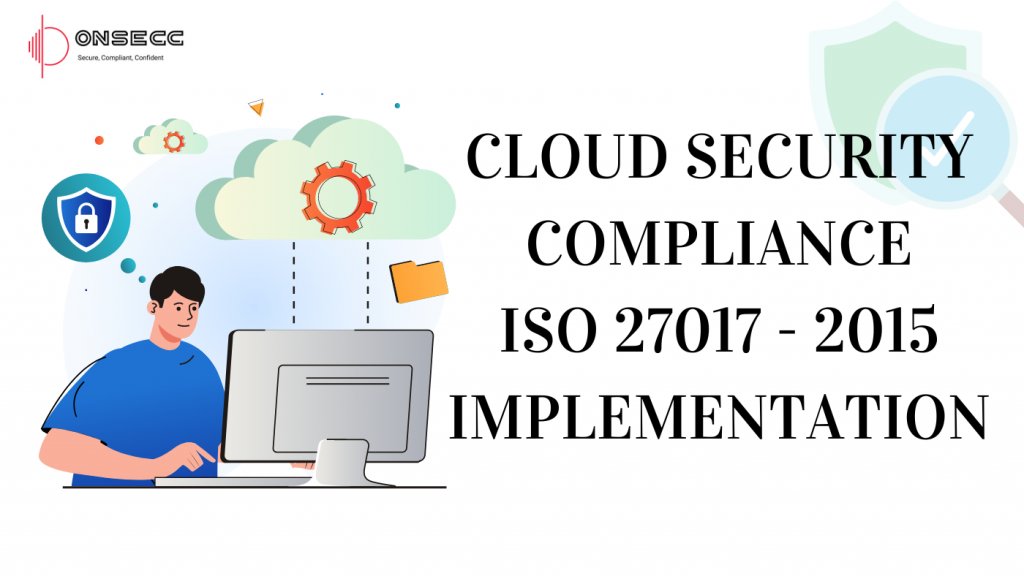
Cloud Security Compliance ISO 27017 – 2015 Implementation

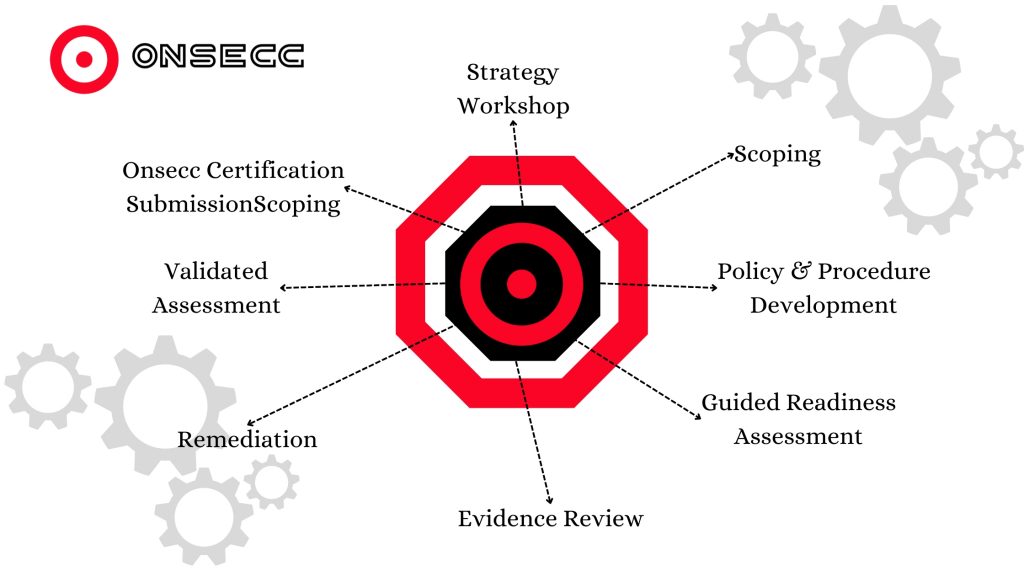
Cloud Security Compliance ISO 27017 – 2015 Implementation Ever feel like your data is floating in the cloud, vulnerable to unseen threats? Fear not! This guide will equip you with the knowledge and tools to navigate the secure skies of cloud computing with ISO 27017.When it comes to cybersecurity compliance Onsecc is recognized as a leading authority that offers expert advice and support. They assist organizations in understanding and complying with the requirements of cloud security standards, like ISO 27017;2015. With a dedication to safeguarding customer data and maintaining the reliability of systems Onsecc becomes a partner for companies aiming to achieve high levels of compliance, in cloud security. In this post, we’ll break down the key principles of ISO 27017 and explore its benefits for organizations looking to secure their data in the cloud. We’ll also provide practical tips and strategies for implementing ISO 27017 compliance, so you can start your journey towards cloud security excellence today! In This Article: Introduction ISO 27017:2015 Understanding Cloud Security Compliance Key Principles of ISO 27017 Benefits of ISO 27017 Compliance Implementing ISO 27017 Compliance Challenges and Considerations Conclusion Visit Now: Explore our extended range of services to enhance your business’s capabilities and success. Introduction ISO 27017:2015 ISO 27017:2015 is an international standard that provides guidelines for implementing security controls specifically tailored to cloud services. It plays a significant role in ensuring cloud security compliance and the protection of data in cloud environments. By adhering to ISO 27017, organizations can enhance their security posture and gain the confidence of customers and stakeholders. Understanding Cloud Security Compliance Cloud security compliance refers to the adherence to security standards and regulations to ensure the security, privacy, and legal compliance of data in cloud environments. It is of utmost importance as it helps protect sensitive information from unauthorized access, data breaches, and other security threats. Standards like ISO 27017 lay out the framework for organizations to establish robust security measures and maintain compliance in the cloud. Key Principles of ISO 27017 ISO 27017 outlines several key principles that are crucial in maintaining cloud security compliance. These principles include: Responsibilities between cloud service providers and cloud customers ISO 27017 delineates the responsibilities of both cloud service providers and cloud customers in ensuring the security of data and systems. Cloud service providers are responsible for the security of the cloud infrastructure, while cloud customers are accountable for appropriately configuring and using the cloud services. By clearly defining these roles, ISO 27017 ensures that security responsibilities are properly allocated. Governance of information security in the cloud Effective governance of information security is essential in cloud environments. ISO 27017 emphasizes the need for organizations to establish and maintain a robust governance framework to manage risks, implement controls, and ensure compliance with security requirements. This principle helps organizations establish a strong foundation for their cloud security programs. Compliance with legal and regulatory requirements The cloud landscape is subject to various legal and regulatory requirements, which can vary across jurisdictions. ISO 27017 provides guidance on how organizations can navigate these complexities and ensure compliance with relevant laws and regulations. By adhering to ISO 27017, organizations can mitigate legal and regulatory risks associated with cloud services. Examples or case studies illustrating these principles in action can provide valuable insights for organizations. One such example is a multinational corporation that adopted ISO 27017 to enhance their cloud security compliance. By clearly defining roles and responsibilities, they were able to effectively manage security risks and ensure compliance with legal and regulatory requirements across different regions. Loading… Benefits of ISO 27017 Compliance ISO 27017 compliance offers several advantages for organizations striving to maintain a secure cloud environment: Enhanced security posture in cloud environments By following the guidelines set forth in ISO 27017, organizations can significantly strengthen their security measures in the cloud. This includes implementing robust access controls, encryption mechanisms, and incident response procedures. The enhanced security posture helps safeguard data and systems against potential threats. Improved risk management ISO 27017 places a strong emphasis on risk management in the cloud. Organizations that adhere to this standard gain a better understanding of the potential risks and vulnerabilities inherent in cloud services. They can then implement appropriate controls and mitigation strategies to manage these risks effectively. Greater confidence for customers and stakeholders ISO 27017 compliance demonstrates an organization’s commitment to maintaining high levels of security in the cloud. By adhering to this standard, organizations can instill confidence in their customers, partners, and stakeholders. It serves as a strong differentiator and can positively impact business relationships. ISO 27017 compliance should be viewed as an integral part of an organization’s overall cloud security strategy. It provides a solid foundation and framework for implementing effective security controls and ensuring compliance in the cloud. Implementing ISO 27017 Compliance Implementing ISO 27017 compliance requires careful planning and execution. Here are some practical tips and strategies for organizations looking to adhere to this standard: Assessing cloud security risks Before implementing ISO 27017, organizations should conduct a thorough assessment of their cloud security risks. This involves identifying potential vulnerabilities and threats, evaluating the impact of these risks, and prioritizing security measures accordingly. Selecting appropriate cloud service providers Choosing the right cloud service provider is crucial for ensuring cloud security compliance. Organizations should carefully evaluate the security capabilities of potential providers, including their adherence to ISO 27017 and other relevant standards. Additionally, organizations should consider contractual agreements that clearly outline the security responsibilities of both parties. Establishing clear roles and responsibilities ISO 27017 emphasizes the importance of clearly defining roles and responsibilities between cloud service providers and cloud customers. Organizations should establish comprehensive agreements that outline the specific security obligations of each party. This clarity helps avoid misunderstandings and ensures that all aspects of security are appropriately addressed. Monitoring and continuous improvement ISO 27017 compliance is an ongoing process. Organizations should continuously monitor their cloud security controls, evaluate their effectiveness, and make necessary improvements. Regular audits and assessments can help identify areas for improvement and

CSF Certification Framework
Cyber Security

CSF Certification: Building a Secure Foundation with Onsecc for Cybersecurity Success

CSF certification is a prestigious accreditation that validates an organization’s commitment to implementing robust cybersecurity measures. It encompasses technical aspects, people, and processes, making it a holistic solution for safeguarding against cyber threats. It instills confidence in stakeholders and sets organizations apart from their competitors and is the key that unlocks a world of possibilities in the digital realm. Onsecc is a leading cybersecurity consulting firm that specializes in helping organizations achieve CSF certification. Our team of experienced professionals understand the intricacies of the certification process and can guide you through every step, ensuring a smooth and successful journey.

COBIT Framework
Cyber Security

COBIT Framework: Onsecc Connection — Transforming Cybersecurity into a Strategic Advantage

Harnessing COBIT Framework: Unlock Your Organization’s Potential with Onsecc. Elevate Cybersecurity into a Game-Changing Strategic Asset. Discover How to Turn Cyber Challenges into Competitive Advantages and Forge a Path to Unprecedented Success. Dive into Our Exclusive Article to Learn How COBIT’s Powerful Framework Can Propel Your Business Towards Excellence in the Digital Age.

GDPR Compliance
Cyber Security

GDPR Compliance: Unveiling Onsecc’s Secret Weapon for Data Security

GDPR Compliance: Unveiling Onsecc’s Secret Weapon for Data Security GDPR compliance is essential for any business that collects, stores or processes personal data. Learn the key requirements of the General Data Protection Regulation and take steps to ensure your business is compliant. Get the latest updates and advice on GDPR compliance in one sec. on Onsecc. In this article: Introduction Understanding GDPR Compliance The Role of Data Security in GDPR Compliance Onsecc: An Innovative Approach to GDPR Compliance Encryption Technology Secure Data Storage Access Controls & User Authentication Regular Data Audits Incident Response & Reporting Key Advantages of Onsecc’s Secret Weapon Common Challenges in GDPR Compliance Case Studies: Successful Implementation of Onsecc’s Secret Weapon Implications for Businesses Conclusion Free Assessment Also Read: The NIST Cybersecurity Framework: Is Your Organization Prepared for the Worst? Introduction The Significance of Data Security in the Digital Era In this digital era, data has become the lifeblood of organizations. The exponential growth of data collection and processing has led to an increased vulnerability of personal information. Therefore, ensuring robust data security has become of utmost importance for businesses around the world. The potential risks associated with data breaches and unauthorized access make it imperative for organizations to adopt effective security measures to protect sensitive information. The Emergence of GDPR as a Landmark Regulation for Protecting Personal Data To address the growing concerns surrounding data protection and privacy, the General Data Protection Regulation (GDPR) was introduced. Implemented in May 2018, GDPR has emerged as a significant landmark regulation for safeguarding personal data. It aims to establish a standardized set of rules and guidelines to regulate the collection, processing, and storage of personal data within the European Union. GDPR compliance has become mandatory for organizations handling the personal data of individuals residing in the EU, regardless of their geographical location. Understanding GDPR Compliance Overview of the General Data Protection Regulation (GDPR) GDPR is a comprehensive set of laws designed to protect the privacy and personal information of individuals within the European Union. It provides individuals with greater control over their data and sets strict guidelines for organizations to maintain data security and transparency. GDPR’s primary objective is to give individuals more power over their personal information and ensure that organizations handle and process data responsibly. Key Principles and Objectives Behind GDPR Compliance GDPR compliance is based on several key principles. These principles include lawfulness, fairness, and transparency in data processing, purpose limitation, data minimization, accuracy of data, storage limitation, integrity, and confidentiality. Organizations need to meet these principles to ensure compliance and protect the rights of data subjects. Scope and Applicability of GDPR Regulations GDPR applies to data controllers and processors dealing with the personal data of individuals within the European Union. It encompasses a wide range of data, including individuals’ identifiable information, such as names, addresses, financial information, and even IP addresses. Regardless of their size or location, organizations that process EU personal data must comply with GDPR regulations or face severe penalties. The Role of Data Security in GDPR Compliance Linking Data Security and GDPR Compliance Data security plays a crucial role in achieving GDPR compliance. Adequate security measures are essential to safeguard personal data from unauthorized access, breaches, or misuse. By implementing robust data security practices, organizations can ensure the confidentiality, integrity, and availability of personal data, thus fulfilling the requirements set forth by GDPR. The Importance of Safeguarding Data against Breaches and Unauthorized Access Data breaches can have severe consequences for both individuals and organizations. By prioritizing data security, organizations can prevent unauthorized access and mitigate the risks associated with data breaches. Compliance with GDPR not only protects the rights and privacy of individuals but also helps organizations maintain their reputation and trust among customers. Onsecc: An Innovative Approach to GDPR Compliance Introducing Onsecc and Its Unique Data Security Solutions Onsecc is a pioneering company that offers state-of-the-art data security solutions designed specifically to achieve GDPR compliance. With its expertise in data protection, Onsecc provides businesses with a comprehensive suite of tools and technologies to safeguard personal data effectively. Key Features and Benefits of Onsecc’s Secret Weapon for Data Security Onsecc’s secret weapon for data security encompasses a range of features and benefits. These include advanced encryption technology, secure data storage solutions, access controls, user authentication, and efficient incident response and reporting capabilities. By leveraging these features, organizations can enhance their data security measures and streamline the process of GDPR compliance. Also Read: SOC 2 Compliance: Is It Too Late To Protect Your Data? Encryption Technology Exploring the Power of Encryption in Achieving GDPR Compliance Encryption technology plays a pivotal role in achieving General Data Protection Regulation compliance by protecting personal data from unauthorized access. By encrypting data, organizations ensure that only authorized individuals can decrypt and access sensitive information. Encryption provides an additional layer of security, making it significantly challenging for malicious actors to exploit personal data. Encryption Methods Employed by Onsecc for Data Protection Onsecc utilizes cutting-edge encryption methods to enhance data security and facilitate General Data Protection Regulation compliance. With advanced cryptographic algorithms and key management systems, Onsecc ensures that personal data remains confidential and secure, both during storage and transmission. Secure Data Storage Understanding the Importance of Secure Data Storage in GDPR Compliance Secure data storage is a critical aspect of GDPR compliance. Organizations must implement robust measures to protect personal data during its storage. Failure to secure data storage can lead to unauthorized access, data breaches, and non-compliance penalties. Therefore, organizations need to adopt secure data storage solutions that meet the rigorous standards set by GDPR. Onsecc’s State-of-the-Art Solutions for Secure Data Storage Onsecc offers innovative solutions for secure data storage, leveraging cutting-edge technologies and industry best practices. Their state-of-the-art storage systems incorporate encryption, access controls, and data redundancy mechanisms, providing organizations with a highly secure environment to safeguard personal data. Access Controls & User Authentication Limiting Access to Personal Data to Authorized Individuals GDPR mandates that access to personal data should be limited to authorized individuals

Scroll to Top