
cyber security

GDPR Compliance
Cyber Security

GDPR Compliance: Unveiling Onsecc’s Secret Weapon for Data Security

GDPR Compliance: Unveiling Onsecc’s Secret Weapon for Data Security GDPR compliance is essential for any business that collects, stores or processes personal data. Learn the key requirements of the General Data Protection Regulation and take steps to ensure your business is compliant. Get the latest updates and advice on GDPR compliance in one sec. on Onsecc. In this article: Introduction Understanding GDPR Compliance The Role of Data Security in GDPR Compliance Onsecc: An Innovative Approach to GDPR Compliance Encryption Technology Secure Data Storage Access Controls & User Authentication Regular Data Audits Incident Response & Reporting Key Advantages of Onsecc’s Secret Weapon Common Challenges in GDPR Compliance Case Studies: Successful Implementation of Onsecc’s Secret Weapon Implications for Businesses Conclusion Free Assessment Also Read: The NIST Cybersecurity Framework: Is Your Organization Prepared for the Worst? Introduction The Significance of Data Security in the Digital Era In this digital era, data has become the lifeblood of organizations. The exponential growth of data collection and processing has led to an increased vulnerability of personal information. Therefore, ensuring robust data security has become of utmost importance for businesses around the world. The potential risks associated with data breaches and unauthorized access make it imperative for organizations to adopt effective security measures to protect sensitive information. The Emergence of GDPR as a Landmark Regulation for Protecting Personal Data To address the growing concerns surrounding data protection and privacy, the General Data Protection Regulation (GDPR) was introduced. Implemented in May 2018, GDPR has emerged as a significant landmark regulation for safeguarding personal data. It aims to establish a standardized set of rules and guidelines to regulate the collection, processing, and storage of personal data within the European Union. GDPR compliance has become mandatory for organizations handling the personal data of individuals residing in the EU, regardless of their geographical location. Understanding GDPR Compliance Overview of the General Data Protection Regulation (GDPR) GDPR is a comprehensive set of laws designed to protect the privacy and personal information of individuals within the European Union. It provides individuals with greater control over their data and sets strict guidelines for organizations to maintain data security and transparency. GDPR’s primary objective is to give individuals more power over their personal information and ensure that organizations handle and process data responsibly. Key Principles and Objectives Behind GDPR Compliance GDPR compliance is based on several key principles. These principles include lawfulness, fairness, and transparency in data processing, purpose limitation, data minimization, accuracy of data, storage limitation, integrity, and confidentiality. Organizations need to meet these principles to ensure compliance and protect the rights of data subjects. Scope and Applicability of GDPR Regulations GDPR applies to data controllers and processors dealing with the personal data of individuals within the European Union. It encompasses a wide range of data, including individuals’ identifiable information, such as names, addresses, financial information, and even IP addresses. Regardless of their size or location, organizations that process EU personal data must comply with GDPR regulations or face severe penalties. The Role of Data Security in GDPR Compliance Linking Data Security and GDPR Compliance Data security plays a crucial role in achieving GDPR compliance. Adequate security measures are essential to safeguard personal data from unauthorized access, breaches, or misuse. By implementing robust data security practices, organizations can ensure the confidentiality, integrity, and availability of personal data, thus fulfilling the requirements set forth by GDPR. The Importance of Safeguarding Data against Breaches and Unauthorized Access Data breaches can have severe consequences for both individuals and organizations. By prioritizing data security, organizations can prevent unauthorized access and mitigate the risks associated with data breaches. Compliance with GDPR not only protects the rights and privacy of individuals but also helps organizations maintain their reputation and trust among customers. Onsecc: An Innovative Approach to GDPR Compliance Introducing Onsecc and Its Unique Data Security Solutions Onsecc is a pioneering company that offers state-of-the-art data security solutions designed specifically to achieve GDPR compliance. With its expertise in data protection, Onsecc provides businesses with a comprehensive suite of tools and technologies to safeguard personal data effectively. Key Features and Benefits of Onsecc’s Secret Weapon for Data Security Onsecc’s secret weapon for data security encompasses a range of features and benefits. These include advanced encryption technology, secure data storage solutions, access controls, user authentication, and efficient incident response and reporting capabilities. By leveraging these features, organizations can enhance their data security measures and streamline the process of GDPR compliance. Also Read: SOC 2 Compliance: Is It Too Late To Protect Your Data? Encryption Technology Exploring the Power of Encryption in Achieving GDPR Compliance Encryption technology plays a pivotal role in achieving General Data Protection Regulation compliance by protecting personal data from unauthorized access. By encrypting data, organizations ensure that only authorized individuals can decrypt and access sensitive information. Encryption provides an additional layer of security, making it significantly challenging for malicious actors to exploit personal data. Encryption Methods Employed by Onsecc for Data Protection Onsecc utilizes cutting-edge encryption methods to enhance data security and facilitate General Data Protection Regulation compliance. With advanced cryptographic algorithms and key management systems, Onsecc ensures that personal data remains confidential and secure, both during storage and transmission. Secure Data Storage Understanding the Importance of Secure Data Storage in GDPR Compliance Secure data storage is a critical aspect of GDPR compliance. Organizations must implement robust measures to protect personal data during its storage. Failure to secure data storage can lead to unauthorized access, data breaches, and non-compliance penalties. Therefore, organizations need to adopt secure data storage solutions that meet the rigorous standards set by GDPR. Onsecc’s State-of-the-Art Solutions for Secure Data Storage Onsecc offers innovative solutions for secure data storage, leveraging cutting-edge technologies and industry best practices. Their state-of-the-art storage systems incorporate encryption, access controls, and data redundancy mechanisms, providing organizations with a highly secure environment to safeguard personal data. Access Controls & User Authentication Limiting Access to Personal Data to Authorized Individuals GDPR mandates that access to personal data should be limited to authorized individuals
NIST
Cyber Security

The NIST Cybersecurity Framework: Is Your Organization Prepared for the Worst?

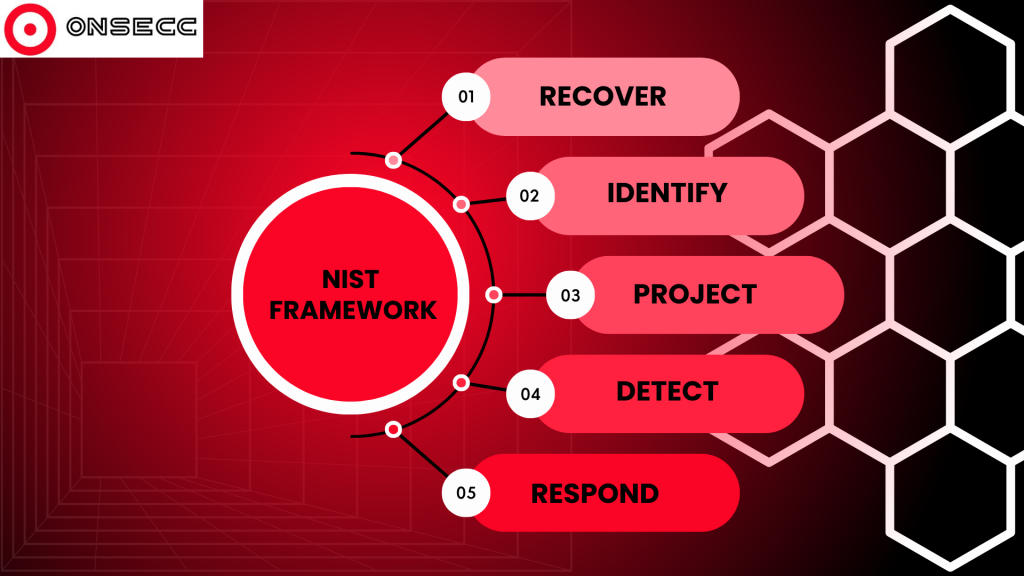
The NIST Cybersecurity Framework provides organizations with the guidelines and best practices necessary to proactively protect their networks and data from cyber threats. This comprehensive system is composed of 5 core categories and is customizable to fit the unique needs of each individual organization, helping them stay ahead of cybercriminals and ensure the security of their systems. Onsecc is proud to provide cutting-edge cybersecurity solutions that help organizations meet and exceed the standards of the NIST Cybersecurity Framework. Our comprehensive set of solutions, combined with our experienced security professionals, are equipped to give organizations a total cybersecurity solution tailored to their individual needs.

Cyber Security - 1
Cyber Security

Cyber Security in the New World: A Comprehensive Guide

Cyber Security in the New World: A Comprehensive Guide Free Assessment Introduction: The Growing Need for Cyber Security in the Digital Age In the digital age, cyber security has become an essential tool for organizations to protect their data and systems from malicious attacks. As the world is shifting towards digital transformation, businesses are increasingly becoming vulnerable to cyber threats. Cybersecurity threats such as data breaches, malware, phishing scams and ransomware have been on the rise in recent years. These threats can have a huge impact on businesses if not addressed properly. It is therefore important for organizations to take the necessary steps to ensure that their systems and data are secure against these cyber threats. Companies must invest in the right tools, technologies and personnel to protect their online assets from any potential attack. Also Read: Cyber Security Framework What Are the Most Common Types of Cybersecurity Threats? Cybersecurity threats are a growing concern in our increasingly digital world. There are several common types of cyber threats that organizations need to be aware of, including: Malware Attacks: Malware is a type of malicious software that can be used to gain access to a system or steal data. Phishing: Phishing involves sending emails or messages with malicious links or attachments in an attempt to trick users into providing sensitive information. Credential Stuffing: Credential stuffing is a type of attack where attackers use stolen login credentials from other sites to gain access to accounts on other sites. Ransomware Attacks: Ransomware attacks involve encrypting data so that it cannot be accessed until a ransom is paid. Organizations need to be aware of these common types of cyber threats and take steps to protect themselves. By understanding the risks and taking the appropriate measures, organizations can protect their data and minimize the risk of a successful attack. How to Strengthen Your Business’s Cybersecurity with Advanced Solutions? Cybersecurity is a growing concern for businesses of all sizes. With advanced cyber security solutions, businesses can ensure that their data and networks remain safe from malicious actors. Endpoint protection software, antivirus software and services, and other advanced cybersecurity solutions can help strengthen your business’s security posture. These solutions allow businesses to protect their systems from external threats like malware, phishing attacks, ransomware, and more. By investing in the latest cyber security solutions, businesses can reduce the risk of data breaches and other costly consequences of online attacks. Tools and Strategies for Increasing Your Small Business’s Digital Security As a small business owner, it is important to ensure the safety of your data and customer information. With the right tools and strategies, you can increase your small business’s digital security and protect yourself from potential cyber threats. Data encryption technology is one of the most important tools for increasing digital security. It helps to protect data from unauthorized access and keeps it safe even if it falls into the wrong hands. Additionally, having a secure passwords policy in place is essential for protecting your accounts from hackers. Lastly, two-factor authentication can provide an extra layer of protection by requiring additional steps before granting access to an account or device. By implementing these tools and strategies, you can ensure that your small business’s digital security is up to date and protected against any potential threats. Automating Cyber Security Solutions & Monitoring Tools Automation is becoming increasingly important in the world of cyber security. Automated solutions and monitoring tools can help organizations protect their data from malicious actors and prevent costly data breaches. These automated solutions are designed to detect potential threats, alert administrators to suspicious activities, and take action to mitigate potential risks. They can also be used to monitor networks for any changes that might indicate a security breach or attack. By automating cyber security solutions, organizations can reduce their risk of suffering a data breach while also reducing the time and resources needed for manual monitoring. Automated tools are becoming increasingly popular as they provide an efficient way to maintain network security without sacrificing quality or performance. What Are the Benefits of Implementing a Comprehensive Cybersecurity Plan? In the ever-evolving world of digital technology, it is essential to have a comprehensive cybersecurity plan in place in order to protect your business and its data. A comprehensive cybersecurity plan can help prevent data breaches and online fraud, as well as protect against malicious attacks. It also provides an extra layer of security for customer information, which is invaluable in today’s digital age. Implementing a comprehensive cybersecurity plan can provide numerous benefits for businesses, including improved data security, increased customer trust and confidence, reduced costs associated with data breaches or online fraud prevention strategies, and improved efficiency of operations. Conclusion: Preparation is Key to Securing Your Business in the Digital Economy. The digital age has brought immense opportunities for businesses to grow and thrive, but it has also brought a new wave of cybersecurity threats. Cybersecurity threats like malware, phishing, credential stuffing, and ransomware attacks are becoming increasingly common. Organizations must invest in the right tools, technologies, and personnel to protect their data and systems from these malicious attacks. Cybersecurity solutions such as endpoint protection software, antivirus software and services, and data encryption technology can help strengthen your business’s digital security. Additionally, implementing a secure passwords policy, two-factor authentication, and other online fraud prevention strategies can help protect your customer information from malicious actors. By investing in the right tools, technologies, and personnel, businesses can protect their data and systems from online threats and ensure a secure digital future.            It is essential for businesses to take the necessary steps to protect themselves from cyber threats. Companies need to invest in the right tools, technologies, and personnel to ensure their data and systems are secure. Additionally, investing in a comprehensive cybersecurity plan can provide numerous benefits to businesses, including improved data security, increased customer trust, and reduced costs. Preparation is key to securing your business in the digital economy. Taking the time to invest in the right tools

Scroll to Top